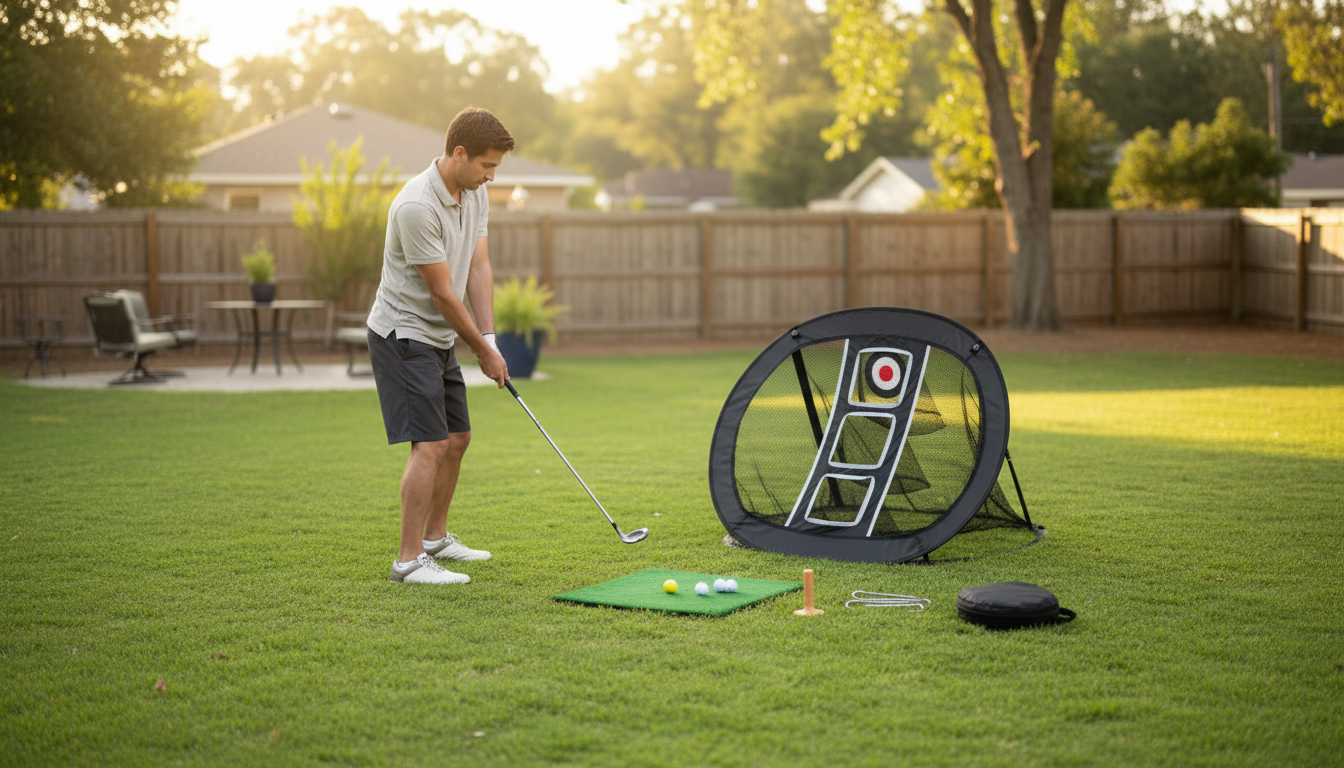
A portable chipping net turns a small patch of grass, a garage, or a patio into a reliable short-game station. With a pop-up design, setup stays quick, practice stays focused, and cleanup takes seconds—ideal for building touch and contact without a full range session.
What This Pop-Up Chipping Net Helps Improve
A target-based net does more than “catch balls.” It creates a repeatable environment where the same motion can be tested, adjusted, and reinforced without guessing where the shot would have finished.
- Distance control on short chips by giving a consistent landing/target zone
- Start line and face control by aiming at defined pockets/targets
- Strike quality (cleaner contact) through repeatable reps in a familiar space
- Routine building: short sessions that are easier to fit into weekdays
- Confidence under pressure by practicing specific “up-and-down” scenarios
Quick Setup and Safe Backyard Use
Backyard practice is at its best when it’s safe, predictable, and easy to repeat. A few small setup habits can protect your space and make every rep more useful.
- Pick a flat area with a clear buffer behind the net (avoid windows, cars, and foot traffic).
- Use practice balls (foam or limited-flight) for tighter spaces; use real balls only where safe and permitted.
- Set the net on stable ground; if it’s breezy, add ground stakes or weights when available.
- Align the net to an intermediate target (a small mark on the ground) to train start line.
- Keep wedges and clubs dry/clean to protect the hitting area and reduce slipping.
For fundamentals like ball position, weight distribution, and a simple chipping motion, the PGA of America is a solid reference point. For general guidance around playing and practicing responsibly, the USGA Rules of Golf page is a helpful resource.
Backyard Practice Plan: 10–15 Minutes That Translates to the Course
Short-game improvement often comes from small, frequent sessions. The goal is to keep the process simple: clear target, clear intention, and just enough structure to avoid mindless repetition.
- Warm-up (2 minutes): 10 easy chips focusing on center-face contact and balanced finish.
- Ladder drill (5 minutes): 10 balls at three distances (short/medium/long) to the same target; score 1 point for each “in the pocket” or within a defined ring.
- Random practice (5 minutes): alternate clubs and distances every ball to mimic real play.
- Pressure finish (3 minutes): choose a single target pocket—make 3 in a row before stopping.
- Track one metric only (per session): either makes, proximity, or strike quality to keep practice simple.
Simple scoring ideas for net practice
| Drill |
How it works |
What it trains |
Easy scoring |
| 3-distance ladder |
Hit 3 short, 3 medium, 3 long to the same pocket |
Distance control |
1 point per ball in pocket |
| Start-line gate |
Aim through an imaginary “gate” (two marks) into the net |
Face control and alignment |
1 point for starting on line |
| Up-and-down simulation |
Alternate chip target + “one-putt” mindset |
Routine and pressure |
Score out of 9 balls |
Getting the Most Out of a Multi-Target Net
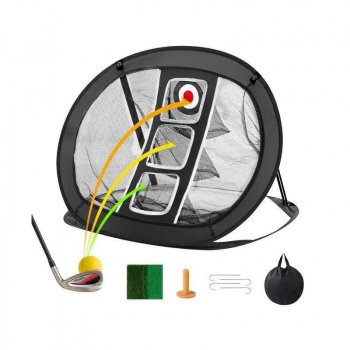
If your net includes multiple pockets or target zones, treat it like a mini short-game course: each target has a “job,” and each rep has a purpose.
- Use the smallest target as the default to tighten accuracy, then “move up” when fatigue sets in.
- Assign targets to distances (e.g., low pocket = 10 yards, middle = 20, high = 30) to reinforce feel.
- Practice one trajectory at a time: low runner, stock chip, and higher soft chip.
- Vary lies: a towel under the ball for tight lie simulation, slightly longer grass for fluffier lies.
- Add consequences: miss the target pocket and do a reset rep focusing on tempo and finish.
Who This Training Aid Fits Best
- Beginners: immediate feedback and a clear target for learning basic chipping motion
- Intermediate golfers: structured drills for distance control and consistency
- Busy schedules: quick sessions without driving to a range
- Small-space practice: pop-up portability for garage, backyard, or driveway setups
- Families: safe, repeatable practice when paired with foam or limited-flight balls
Care, Storage, and Longevity Tips
- Let the net dry if used on damp grass to reduce odor and material wear.
- Store away from direct sunlight for long periods to help prevent fading/brittleness.
- Avoid overloading one spot—rotate target use to distribute impact.
- Check seams and frame tension periodically; minor issues are easier to address early.
- Keep a small pouch for stakes/weights so setup remains truly “grab-and-go.”
Product Options for a Simple Home Practice Setup
FAQ
Can a chipping net replace range practice?
It can’t fully replace full-flight feedback, but it’s excellent for building contact, start line, and a repeatable distance-control routine. Frequent, short sessions at home often translate into more consistent wedge play between range visits.
What balls work best for backyard chipping practice?
Foam or limited-flight balls are best for small spaces and safety, especially around homes and neighbors. Real balls should only be used when you have ample room, a secure backstop, and a safe, permitted area.
How far should the net be from the hitting spot?
Start around 6–10 feet to focus on clean contact and a reliable start line. As your accuracy improves, move back to add carry, trajectory, and landing-window challenges if your space allows.
Recommended for you

Leave a comment
You must be logged in to post a comment.