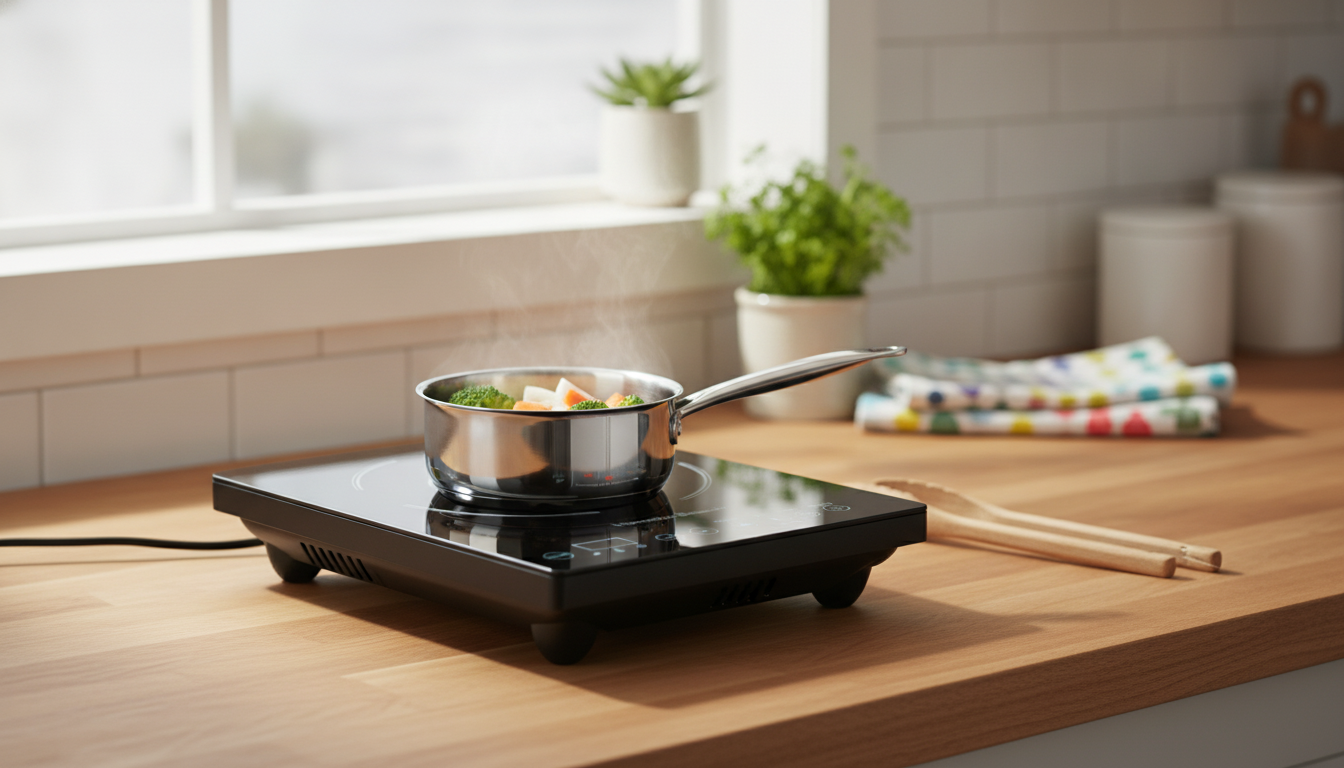
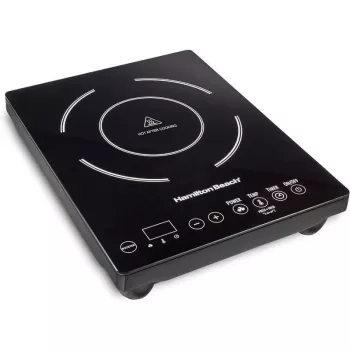
A portable induction cooktop burner delivers quick, controllable heat without an open flame, making it a smart option for small kitchens, dorm rooms, RVs, and anywhere an extra cooking zone helps. Because induction heats compatible cookware directly (not the air around it), it can feel faster and more responsive than many traditional plug-in hot plates. Below is a practical guide to how induction works, what to look for, how to use it day to day, and how to choose cookware that performs reliably.
Induction cooking uses electromagnetic energy to heat the pan itself. Instead of warming a coil or radiant element first, the cooktop creates a magnetic field that excites the metal in compatible cookware, generating heat right in the base of the pan.
For a high-level overview of how induction cooking works and why it’s considered efficient, see the U.S. Department of Energy.
One of the biggest advantages of a portable induction cooktop burner is flexibility. It can act as a “second burner” when the main stove is busy, or as a primary cooker when a full range isn’t available.
Not every cooking surface is built for the same priorities. If speed, control, and a cooler-to-the-touch surface are high on the list, induction is usually the standout—provided cookware is compatible.
| Cooktop type | Heats the pan directly | Works with any cookware | Typical strengths | Typical trade-offs |
|---|---|---|---|---|
| Induction (portable) | Yes | No (needs magnetic cookware) | Fast response, efficient heating, cooler-to-touch surface | Cookware compatibility required; fan noise is common |
| Electric coil hot plate | No | Mostly yes | Affordable and simple | Slower response; more residual heat |
| Infrared/ceramic hot plate | No | Yes | Works with glass/aluminum; steady radiant heat | Slower heat-up; hotter surface |
| Gas burner | No | Yes | Powerful flame; great visual feedback | Open flame; ventilation and fuel access needed |
Cookware compatibility is the make-or-break factor for induction. The good news: checking is simple, and many modern pots and pans already work.
Portable induction cooktops vary a lot in the details. For everyday cooking (not just boiling water), these features are the ones most likely to improve results and reduce frustration.
For more on electrical product safety and certification, the UL Standards and Safety Certification overview is a helpful reference point.
Induction is straightforward, but a few habits can make it feel more consistent—especially when switching from gas or coil burners.
For broader cooking safety tips, review guidance from the National Fire Protection Association.
No—induction requires magnetic cookware. A quick check is the magnet test: if a magnet sticks firmly to the pan’s base, it will usually work; non-magnetic aluminum and copper often need a bonded magnetic base to be compatible.
Induction can be a practical choice because it doesn’t use an open flame and the surface typically runs cooler than coil-style burners. For safe use, place it on a stable surface with clear ventilation around the vents and plug it into an appropriately rated outlet.
A light buzz can happen when the cooktop’s magnetic field causes cookware to vibrate, and many units also use a cooling fan. Thinner pans or certain materials can amplify the sound, while heavier cookware often runs quieter.

Leave a comment
You must be logged in to post a comment.