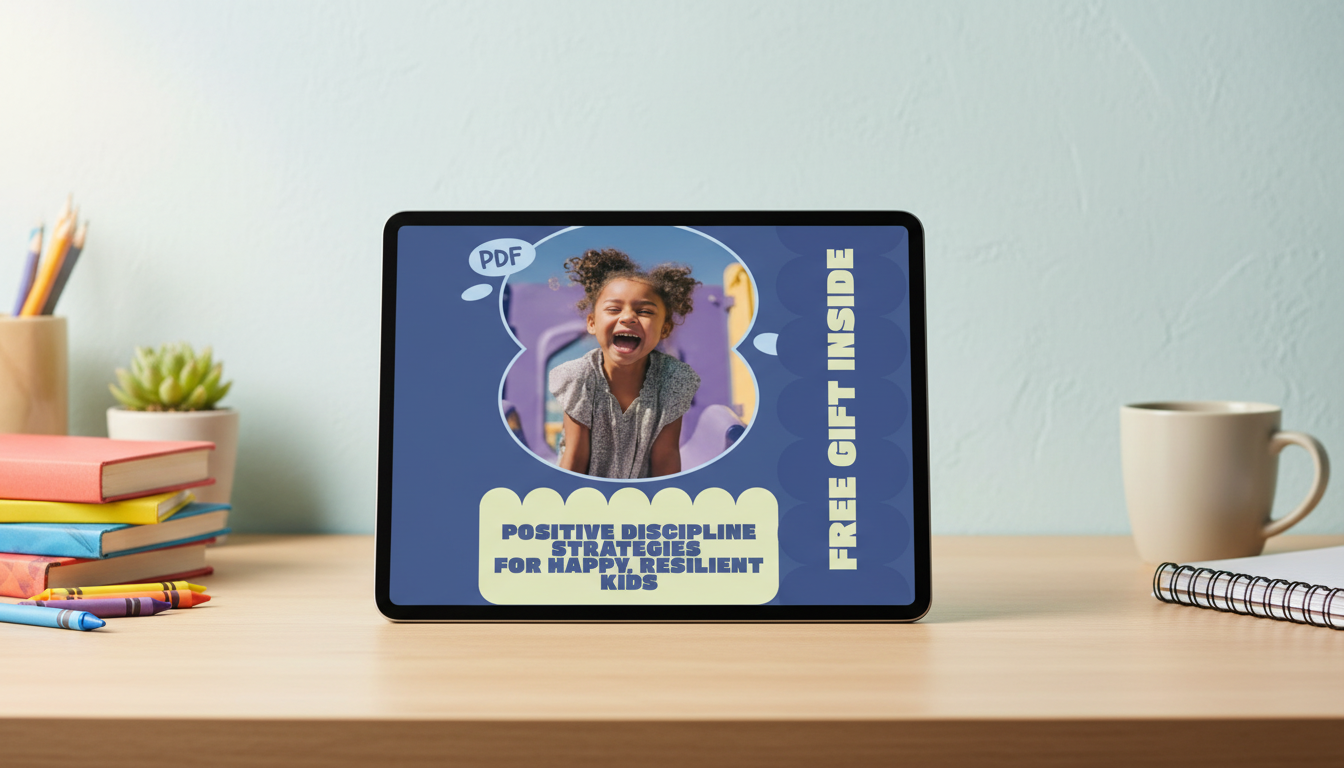
Positive discipline helps kids feel safe, seen, and capable—without relying on fear or shame. With calm communication and clear boundaries, everyday moments (tantrums, sibling conflict, bedtime battles) become opportunities to build emotional skills, self-control, and trust. The goal isn’t “perfect behavior”; it’s raising kids who can handle frustration, repair mistakes, and cooperate because they feel connected and guided.
Positive discipline focuses on teaching skills and strengthening connection, not “winning” power struggles. It uses firm, kind boundaries—meaning a respectful tone paired with consistent follow-through—so kids know where the line is and can predict what happens next.
What it avoids: humiliation, threats, or punishments that create fear rather than learning. Fear can stop behavior temporarily, but it doesn’t teach what to do instead. Positive discipline aims for long-term skills like problem-solving, empathy, responsibility, and self-regulation.
For research-informed guidance on age-appropriate discipline, the American Academy of Pediatrics offers practical recommendations on HealthyChildren.org.
Kids cooperate more readily when they feel understood. Start by reflecting what you see (“You really wanted more time”) before you state what’s next (“We’re leaving now”). Connection doesn’t mean giving in; it means helping a child feel emotionally safe enough to hear you.
Keep rules simple and doable. “Hands stay to yourself” lands better than “Stop being mean.” Clear language tells a child what to do, not only what to stop.
Predictable responses reduce testing and anxiety. When the boundary changes depending on adult mood or energy, kids push harder because they’re trying to find the real limit.
Model the behavior being asked for—tone, patience, and repair. Kids learn emotional regulation by borrowing yours first. For additional evidence-based tools, the CDC’s Essentials for Parenting is a helpful reference.
When kids are flooded with big feelings, long lectures don’t land. Use short, repeatable phrases and calm body language.
| Situation | Calm boundary | Skill being taught |
|---|---|---|
| Yelling at a sibling | “I won’t let you yell at her. Try: ‘I’m upset—give it back.’” | Respectful communication |
| Refusing to leave the park | “It’s hard to stop. We’re leaving now. Do you want to hop or hold hands?” | Transitions + cooperation |
| Hitting when frustrated | “I can’t let you hit. You can stomp, squeeze a pillow, or ask for help.” | Safe outlets + coping |
| Bedtime stalling | “Two books, then lights out. You can choose which books.” | Routines + limits |
| Homework meltdown | “Let’s take a 3-minute break, then start with one problem together.” | Breaks + task initiation |
Boundaries work best when they’re set proactively and enforced calmly—without debates that escalate everyone’s nervous system.
Self-control develops over time. Expecting a child to “calm down” without support is like expecting reading without teaching letters first.
For more perspectives on positive parenting and behavior management, the APA overview on parenting strategies offers additional support.
Even in calm homes, kids melt down—and adults sometimes snap. What happens after matters.
If you want ready-to-use wording, examples, and boundary ideas for real-life moments, Positive Discipline Strategies for Happy, Resilient Kids – Practical Parenting eBook is designed for quick reference—especially during transitions, sibling conflict, chores, and screen-time negotiations.
Many families also find it easier to coach calm behavior when the environment supports it. A cozy “calm corner” can be as simple as a soft surface, a few sensory items, and a predictable place to reset. Two home options that can help create a comfortable landing spot are the Botanical Floral Non-Slip Area Rug – Soft, Modern & Machine Washable and the Soft Velvet Plush Blue Rug for Living Room & Bedroom – Modern Fluffy Carpet.
A common “4 R’s” framework is Respect, Responsibility, Resourcefulness, and Resilience. At home, that looks like speaking to kids with dignity (Respect), guiding them to fix mistakes (Responsibility), helping them find workable options (Resourcefulness), and coaching them to recover after disappointment (Resilience).



Leave a comment
You must be logged in to post a comment.