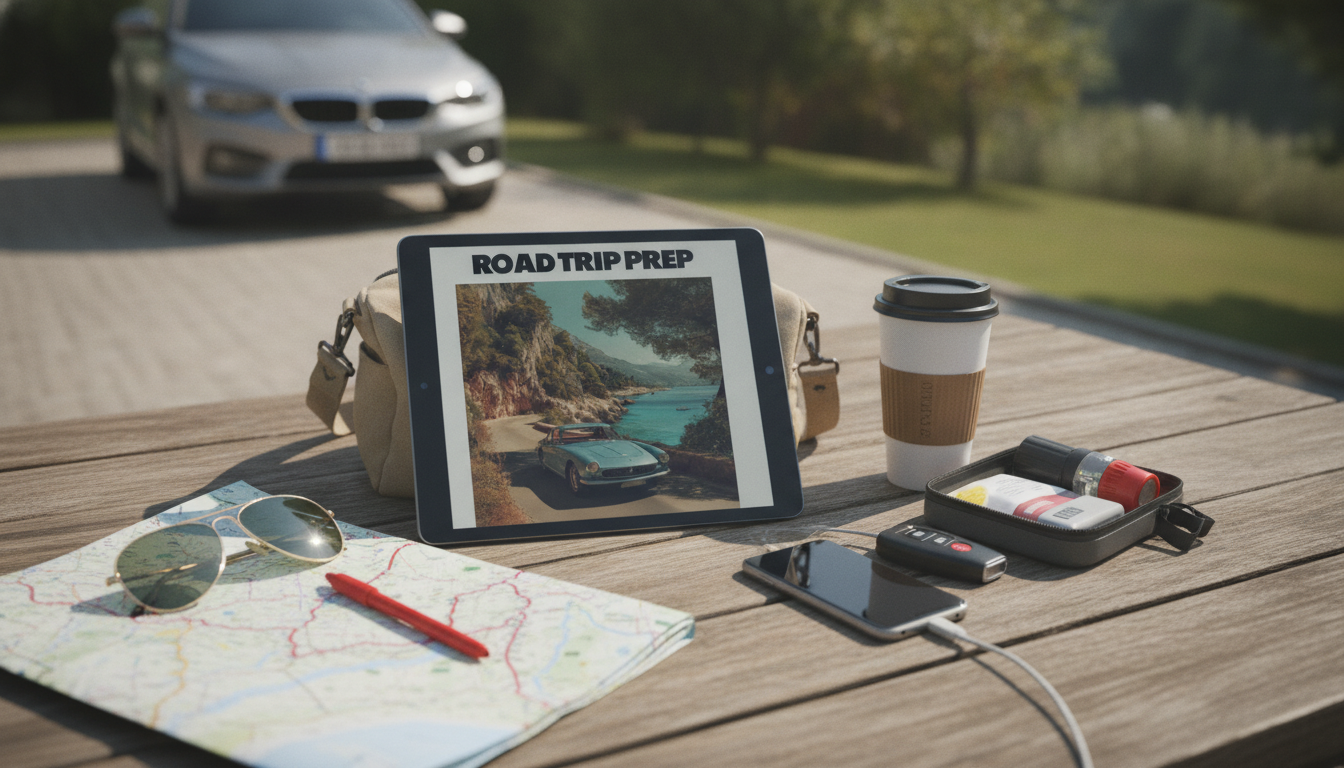
A smooth road trip starts before the engine turns over. A few smart steps—vehicle checks, route planning, packing systems, and safety backups—can prevent delays, reduce stress, and make the drive more enjoyable for families and solo travelers alike. Use the sections below as a step-by-step prep plan that stays simple, organized, and easy to repeat for every trip.
Instead of trying to do everything the night before, use a light timeline that spreads the work into quick, low-effort checkpoints.
A short inspection catches the most common road trip issues—especially tire trouble and visibility problems. For tire-specific safety basics, the NHTSA’s tire safety guidance is a reliable reference.
| Item | What to check | Action if not OK |
|---|---|---|
| Tire pressure | Matches door-jamb sticker; includes spare | Inflate/repair before driving |
| Tread and sidewalls | No bald spots, bubbles, cracks | Replace tire; avoid highway speeds |
| Oil and coolant | Within safe range; no leaks | Top off or service immediately |
| Battery | Starts strong; terminals clean | Test/replace; pack jumper option |
| Lights | All working; lenses clean | Replace bulbs/fuses; clean lenses |
| Wipers | No streaks; blades not cracked | Replace blades; add washer fluid |
The goal isn’t minimalist perfection—it’s being able to find what you need at a gas station without unloading half the trunk.
A good plan leaves room for real life: slow lunch service, random construction, sudden weather shifts, and the fact that people need breaks. If you like a second set of eyes on the basics, the AAA road trip checklist is a helpful cross-check.
If part of your routine includes parks, hikes, or city walking breaks, comfortable footwear can make the whole trip feel easier. Packing a reliable pair like Elegant Pointed Toe Leather Slingback Sandals for Women – Summer Office Heels can help keep “quick stops” from turning into sore-feet detours.
For an all-in-one file designed to be used repeatedly, keep a dedicated road trip planning checklist saved to a phone and cloud storage. A ready-made option like Road Trip Prep Made Easy – Ultimate Road Trip Checklist, Car Preparation Guide, Travel Planning eBook, Family & Solo Travel Digital Download makes it simple to update for season, destination, and group size without rebuilding from scratch.
For destination-specific safety reminders—especially when you’re heading into outdoor areas—reviewing the National Park Service safety resources can help you align your packing and activity plans with current conditions.
Check tire pressure and tread (including the spare), top off key fluids (oil, coolant, brake, washer), confirm the battery is healthy, and test lights and wipers. If you notice pulling, vibration, or braking noise, schedule a quick service before committing to long highway miles.
Start about a week out for major bookings and any maintenance that might require parts. Use the final 2–3 days for route backups and offline maps, then do a 24-hour routine for charging devices, staging documents, and packing non-perishables.
Keep water, easy snacks, wipes/tissues, sunglasses, a phone charger, any essential medication, and a small first aid item or two within driver reach. Store IDs and trip documents together in one pouch so they’re easy to grab without cluttering the cockpit.




Leave a comment
You must be logged in to post a comment.