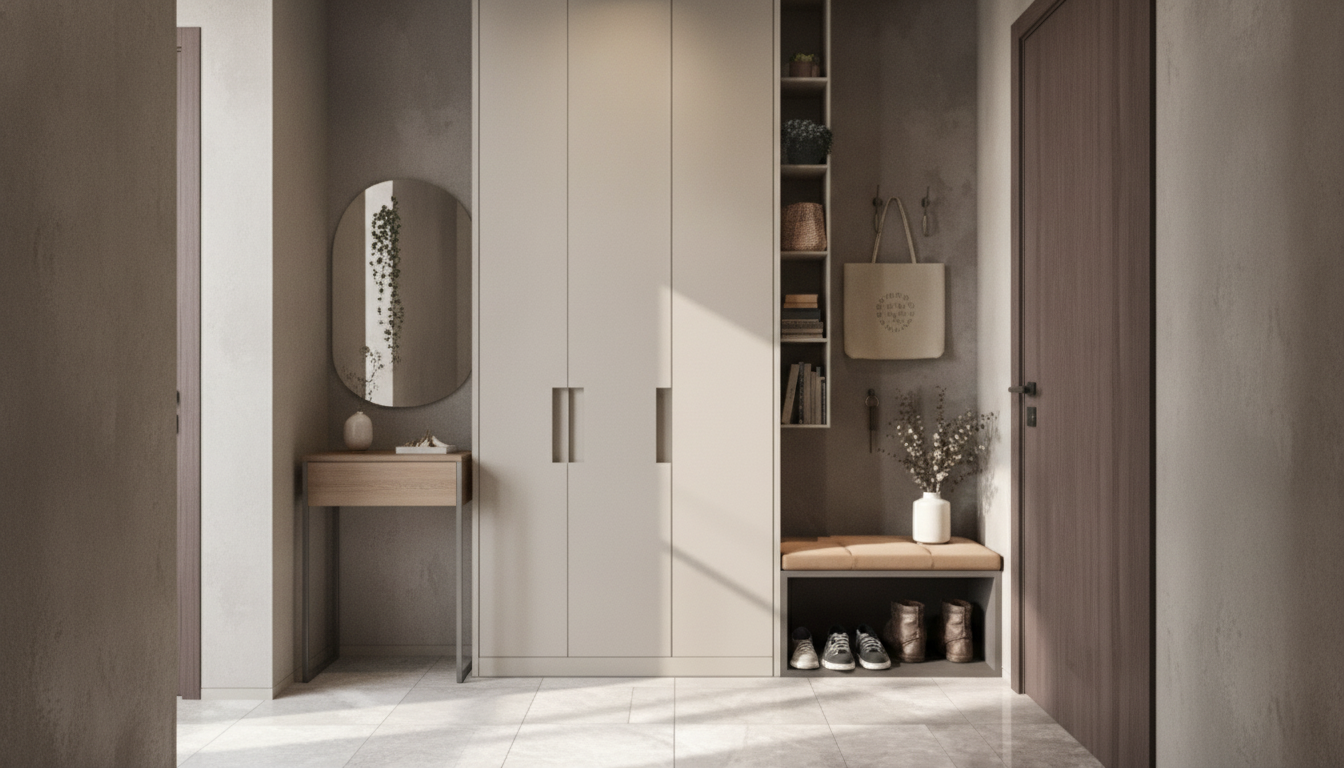
An entryway works best when it acts like a simple “landing pad” for everyday life: shoes, bags, keys, and seasonal gear all get a defined home that’s easy to reach on the way in and out. The goal is a layout that fits the space you have, reduces floor clutter, and stays manageable with quick daily resets.
A quick audit prevents the most common small-space mistake: buying a storage piece that’s too deep, too tall for a door swing, or designed for items you don’t actually keep near the door.
When the “flow” matches real life, clutter stops feeling mysterious. Items land where your hands naturally reach—so you don’t end up with a growing pile on the nearest chair.
Safety matters too: keeping exit access clear is a basic best practice for households and multi-unit buildings alike. For more on maintaining clear paths of travel, see guidance from NFPA (means of egress). If you’re planning around tight circulation or mobility needs, the U.S. Access Board (accessible design standards) is a helpful reference point for clearances.
A small entryway feels larger when storage is divided into clear zones rather than one overflowing pile. Choose containers that match the item: trays for small daily carry, bins for accessories, closed storage for visual calm, and breathable options for shoes.
| Zone | What belongs here | Best storage type | Quick setup tip |
|---|---|---|---|
| Key + pocket drop | Keys, wallet, sunglasses, badge | Small tray + shallow bowl | Place within arm’s reach of the door; limit to daily items only |
| Hang zone | Coats, bags, dog leash, hats | Wall hooks + slim rail | Assign one hook per person; add one “guest” hook to prevent overflow |
| Shoe zone | Everyday shoes, slippers | Low rack or lidded bins | Keep only current-season pairs; rotate the rest out monthly |
| Mail + papers | Incoming mail, school notes, returns | Vertical sorter + labeled folder | Add a “to pay/to sign/to file” trio to stop paper spread |
| Grab-and-go | Umbrella, lint roller, hand sanitizer | Narrow caddy or wall pocket | Store “one of each” backup item; rest stays in pantry/closet |
If you want the “defined zone” effect without adding furniture, start with the floor: a low-profile, washable rug visually signals where shoes and bags should stop. A practical option is the Botanical Floral Non-Slip Area Rug – Soft, Modern & Machine Washable, which pairs well with a two-step dirt strategy and makes quick cleanups less of a chore.
If you want a structured, room-by-room method with practical layouts and routines, Making Entryway Storage Work for You (Practical Home Organization eBook) works as a checklist-driven guide to set up zones, choose the right storage types, and keep the system easy to maintain.
Build upward: install hooks or a slim rail for coats and bags, add a narrow shelf for keys and mail, and use a compact shoe rack or lidded bins. Keep the area limited to daily essentials, and rotate seasonal items out regularly so the entry doesn’t overflow.
Set a simple capacity rule per person and match it to a shoe rack or bins with clearly defined slots. Keep only current-season pairs in the entry zone, then do a quick weekly or monthly rotation to move extras to a closet or bedroom.
Give each child one low hook and one labeled bin so the “right spot” is easy to reach and easy to remember. Keep routines simple with a short daily reset, and store adult-only items higher to reduce mix-ups.


Leave a comment
You must be logged in to post a comment.