
Toddlers can feel joy, anger, fear, and frustration at full volume—often with only a few words (or none) to explain what’s going on. That mismatch is a common reason for tantrums, hitting, throwing, or sudden shutdowns. The good news: emotional skills are teachable, and the most effective tools are simple, repeatable, and calm.
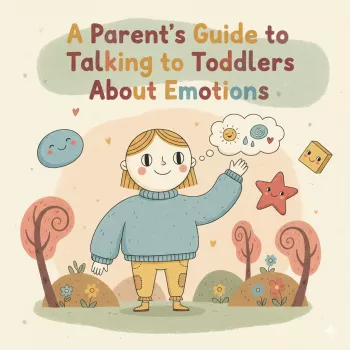
With a steady approach—naming feelings, holding limits, and practicing during everyday routines—toddlers gradually build emotional vocabulary and learn what to do with intense feelings. If you’d like a quick-reference version you can pull up in the moment, A Parent’s Guide to Talking to Toddlers About Emotions (Digital eBook) organizes scripts, steps, and examples for real-life situations.
For additional evidence-based parenting guidance, the CDC’s Essentials for Parenting and the AAP’s Positive Parenting Tips are both helpful references.
Most toddlers cycle through emotions quickly. They want independence, but their impulse control and language skills are still under construction—so feelings often show up as behavior.
Many toddlers can understand more than they can say, shift moods in seconds, and test cause-and-effect through actions (running away, refusing, grabbing). This isn’t “bad attitude”—it’s a developing brain learning how the world responds.
Strong emotions can overwhelm a toddler’s ability to think and speak. Limited vocabulary, sensory overload, and immature self-regulation make it tough to answer questions like “Why are you crying?” in the moment.
Transitions (leaving the park), hunger/tiredness, sharing, separation, and frustration with tricky tasks (zippers, blocks, shoes) are frequent triggers.
Progress can look small: using one feeling word, seeking a cuddle, pausing before hitting, or trying a simple coping tool like taking a breath or asking for help.
When emotions rise, a predictable script helps toddlers feel safe—and helps adults stay consistent. Aim for five steps you can repeat across situations:
Describe what you see: “You wanted the blue cup.” Neutral language lowers defensiveness and keeps you from accidentally shaming.
Use basic words like “mad,” “sad,” “scared,” or “excited.” You can add detail later: “Mad because it’s hard to wait.”
Validation is not permission. Try: “It’s okay to feel mad. It’s not okay to hit.” This separates emotion from behavior.
Toddlers do best with limited options: “Do you want a hug or to stomp your feet?” Too many choices can increase overwhelm.
| Situation | What to say (example) | What to do next |
|---|---|---|
| Frustration (toy won’t work) | “You’re frustrated. That’s hard.” | Show one step, then let them try; offer a break or a different activity |
| Anger (wants a snack now) | “You’re mad you can’t have it yet.” | Set limit + choice: “Snack after lunch. Water or milk now?” |
| Sadness (parent leaves room) | “You feel sad when I go.” | Short goodbye routine; promise + return; comfort item |
| Fear (loud noise) | “That noise surprised you. You’re safe.” | Move away from sound; breathe together; offer a cuddle |
| Overexcitement (running indoors) | “Your body has lots of energy.” | Redirect to safe movement: jumping game, outdoor walk, dance break |
Consider extra support if you’re seeing frequent aggression, self-harm behaviors, major sleep disruption, regression, or intense separation distress that impacts daily life. If concerns persist or safety is an issue, talk with your pediatrician for guidance; the APA also offers resources on helping children cope at APA.org.
When you’re tired, rushed, or in public, it’s hard to remember the “right” words. A Parent’s Guide to Talking to Toddlers About Emotions (Digital eBook) is designed for quick reference with scripts, examples, and simple steps you can reuse across routines, outings, and bedtime.
If you’re setting up a calm-down spot at home, a soft, stable floor surface can make it feel inviting and safe. Options like the Botanical Floral Non-Slip Area Rug – Soft, Modern & Machine Washable or the Soft Velvet Plush Blue Rug for Living Room & Bedroom – Modern Fluffy Carpet can work well in a reading corner where you practice feelings books, breathing, or “stomp feet” resets.
Use a short script: name the feeling, reassure safety, set the limit, and offer one next step. Keep your voice low and save explanations for after your child is calm.
Use one-word labels paired with facial expressions, gestures, and body cues, and repeat them during books and play. Accept pointing, nodding, or choosing between two emotion words as real progress.
Pay attention to duration, intensity, aggression, sleep disruption, regression, or tantrums that significantly disrupt daily life. Track patterns and discuss concerns with a pediatrician, especially if safety is involved.


Leave a comment
You must be logged in to post a comment.