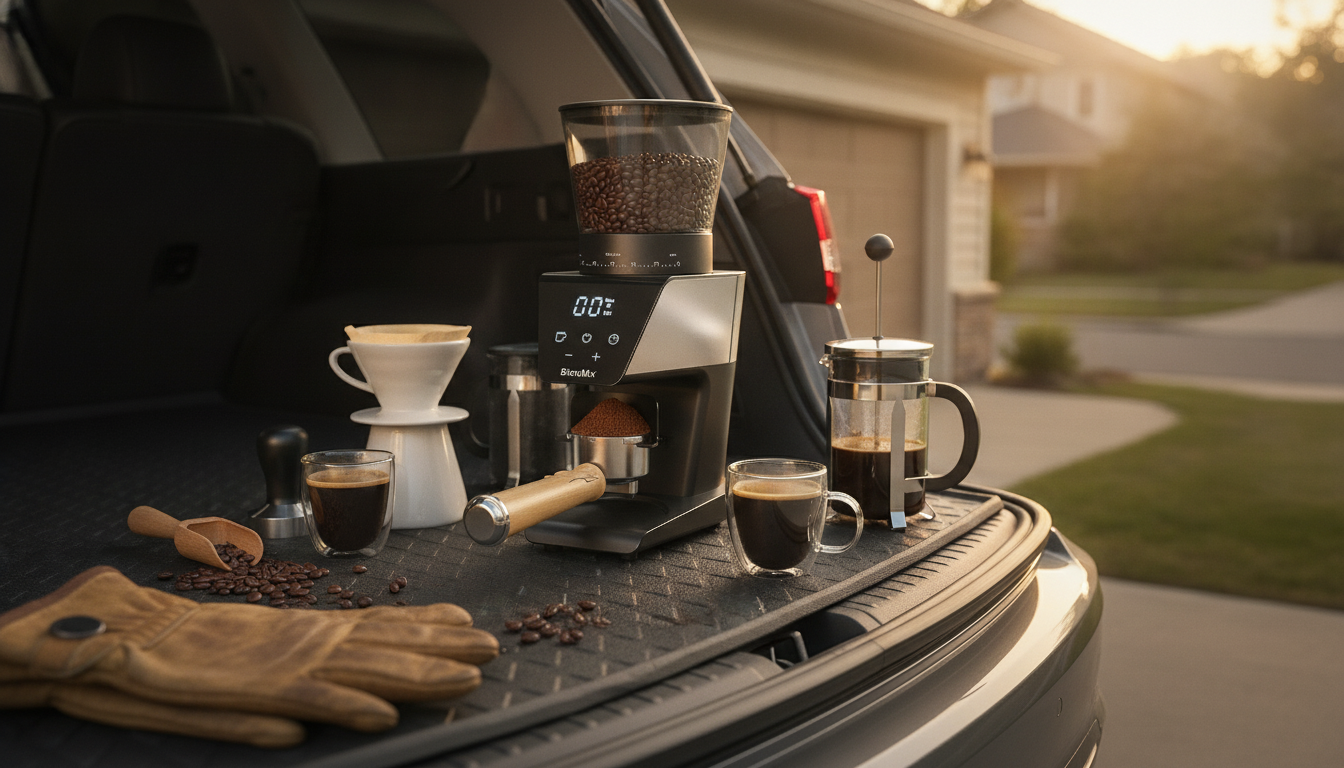
Start by treating the 30 settings as a repeatable “range,” not a single perfect number. Pick a starting point for each brew method, then fine-tune one click at a time based on taste, flow rate, and how the coffee bed looks after brewing. If you’re using a grinder with a timer, lock in the grind first, then adjust the dose/time second.
Espresso needs the finest grind of the three. On many 30-setting conical burr grinders, a practical starting range is around settings 3–8. Pull a shot and watch the timing: if it runs too fast and tastes thin or sour, go finer 1–2 clicks. If it drips slowly, tastes harsh, or chokes the machine, go coarser 1–2 clicks. Keep everything else steady (dose, tamp pressure, basket) so each adjustment is meaningful.
Pour-over sits in the middle—typically around settings 10–18. If the brew drains too quickly and tastes sharp or watery, grind finer. If it stalls, tastes muddy, or turns bitter, grind coarser. A good sign is an even, flat bed with no deep crater and a consistent drawdown rather than sudden channeling.
French press performs best with a coarse grind, often around settings 20–28. If you’re getting heavy sediment and bitterness, go coarser and/or shorten steep time. If it tastes weak or hollow, go slightly finer. Coarser particles reduce fines, helping the plunger move smoothly and keeping the cup cleaner.
Write down the setting that works for each coffee and method, especially after changing beans. Bean freshness, roast level, and humidity can shift the “sweet spot,” so expect small adjustments over time. For a deeper walkthrough of dialing in a 30-setting grinder (including timer use), visit this complete guide.
Lighter roasts usually need a slightly finer grind to extract well, while darker roasts often perform better a bit coarser to avoid bitterness. Density, brittleness, and how the beans fracture all affect flow and extraction.



Leave a comment
You must be logged in to post a comment.