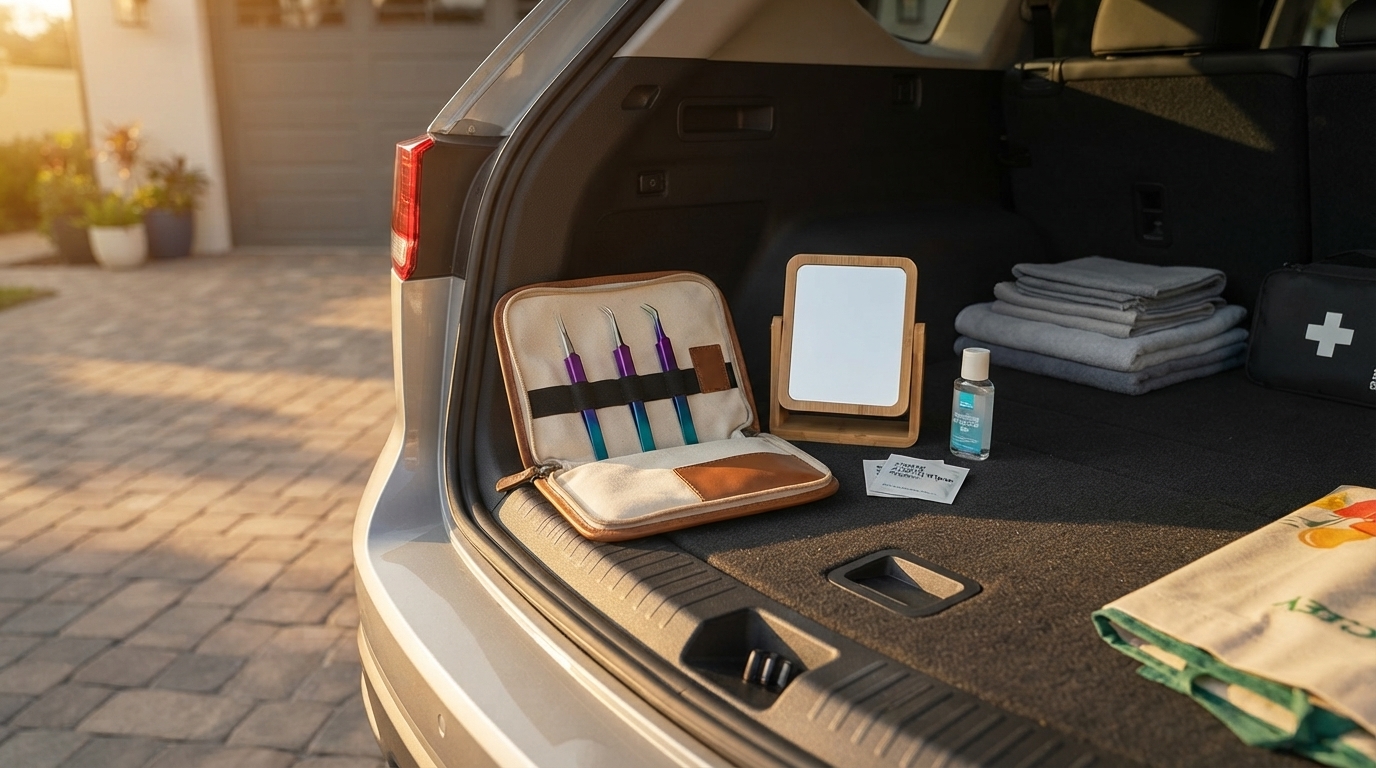
Curved tweezers can be a precise tool for lifting stubborn blackheads, but only when you prep the skin, work gently, and stop at the first sign of irritation. The goal is to remove surface clogs without digging, squeezing aggressively, or breaking the skin.
Start with clean hands and a freshly washed face. Soften the area with a warm (not hot) compress for 5–10 minutes to help loosen debris. Disinfect the curved tweezers with 70% isopropyl alcohol and let them air-dry completely; using damp alcohol on skin can sting and increase irritation.
Work in bright lighting with a mirror. Hold the curved tweezers so the tips hug the skin’s surface, not pointed downward. Instead of stabbing at the pore, use the curve to gently “hook” the exposed edge of the blackhead and lift upward with minimal force.
If the blackhead doesn’t lift with a gentle tug, don’t force it. Forcing can cause bruising, broken capillaries, scabs, or infection. Move on and try again after another warm compress, or consider a chemical exfoliant on a different day rather than repeated picking in one session.
After removal, cleanse the area again to remove any residue. Apply a soothing, non-comedogenic moisturizer. Skip harsh acids, scrubs, or retinoids on that exact spot for the next 24 hours if the skin looks pink or feels tender.
Do not use curved tweezers on inflamed acne, deep “under-the-skin” clogs, or anything painful. If you see swelling, pus, significant redness, or recurring blackheads that won’t budge, a dermatologist or licensed esthetician is the safer next step.
For a deeper step-by-step walkthrough and technique tips, visit this curved tweezers guide.
Stop and don’t force it—digging can tear skin and raise infection risk. Re-soften with a warm compress and try again another day, or switch to gentler options like salicylic acid or a professional extraction.




Leave a comment
You must be logged in to post a comment.