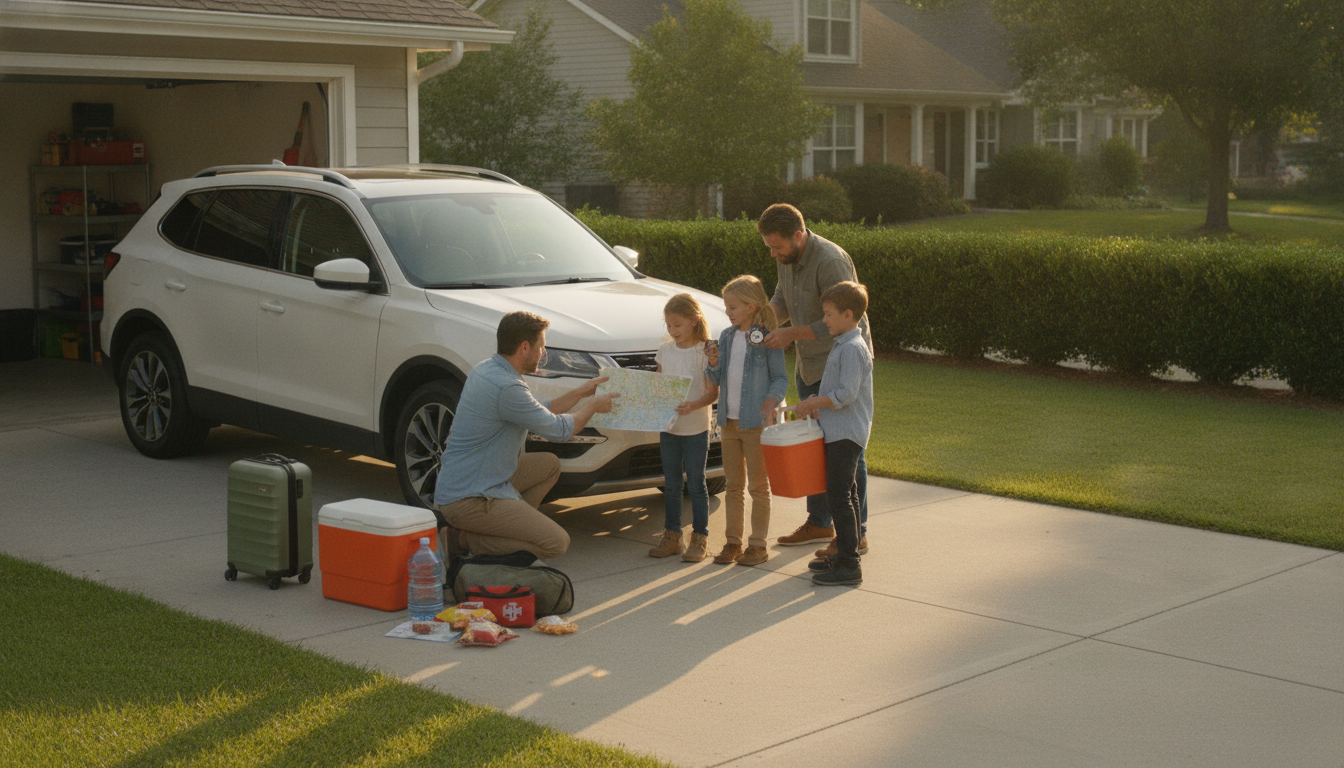
The 3 3 3 rule for road trips is a simple pacing guideline designed to reduce fatigue and keep travel days comfortable: drive for about 3 hours, stop for about 3 minutes (or longer if needed), and repeat—while aiming to stay flexible and listen to your body. Many travelers also use “3” as a reminder to keep daily driving reasonable, such as capping the day around 300 miles when possible, especially on multi-day trips.
Instead of grinding through long, uninterrupted stretches, the rule encourages frequent micro-breaks. After roughly three hours behind the wheel, pull off for a quick reset: step out, stretch your legs, grab water, use the restroom, and do a fast check of the car (tires, lights, anything shifting in the trunk). Even a short pause helps restore alertness and can make the next driving block feel noticeably easier.
It’s also a handy planning tool. If a destination is nine hours away, you can mentally break it into three manageable segments. That makes scheduling meals, fuel, and sightseeing stops feel less chaotic—and helps avoid the end-of-day slump that can happen when you try to “push through” to make time.
The biggest benefit is safety: fatigue and stiffness build up quietly, and short breaks help you catch those warning signs early. It can also help with motion sickness for passengers, reduce irritability, and make road trips more enjoyable overall. For families, it creates predictable stop points that are easier to manage than “whenever we can.”
Set a timer for 2 hours and 45 minutes so you can start looking for a safe exit before the three-hour mark. Keep water and light snacks accessible so your stop stays quick. If you’re traveling with kids or pets, plan for longer breaks—think of “3 minutes” as a minimum reset, not a strict limit.
For more details and practical variations, read the full guide here: https://elevatdlife.com/what-is-the-rule-for-road-trips/.
A good baseline is every 2–3 hours to stretch, hydrate, and reset focus. If conditions are demanding (night driving, heavy traffic, bad weather), stopping a bit more often can help you stay sharp.




Leave a comment
You must be logged in to post a comment.