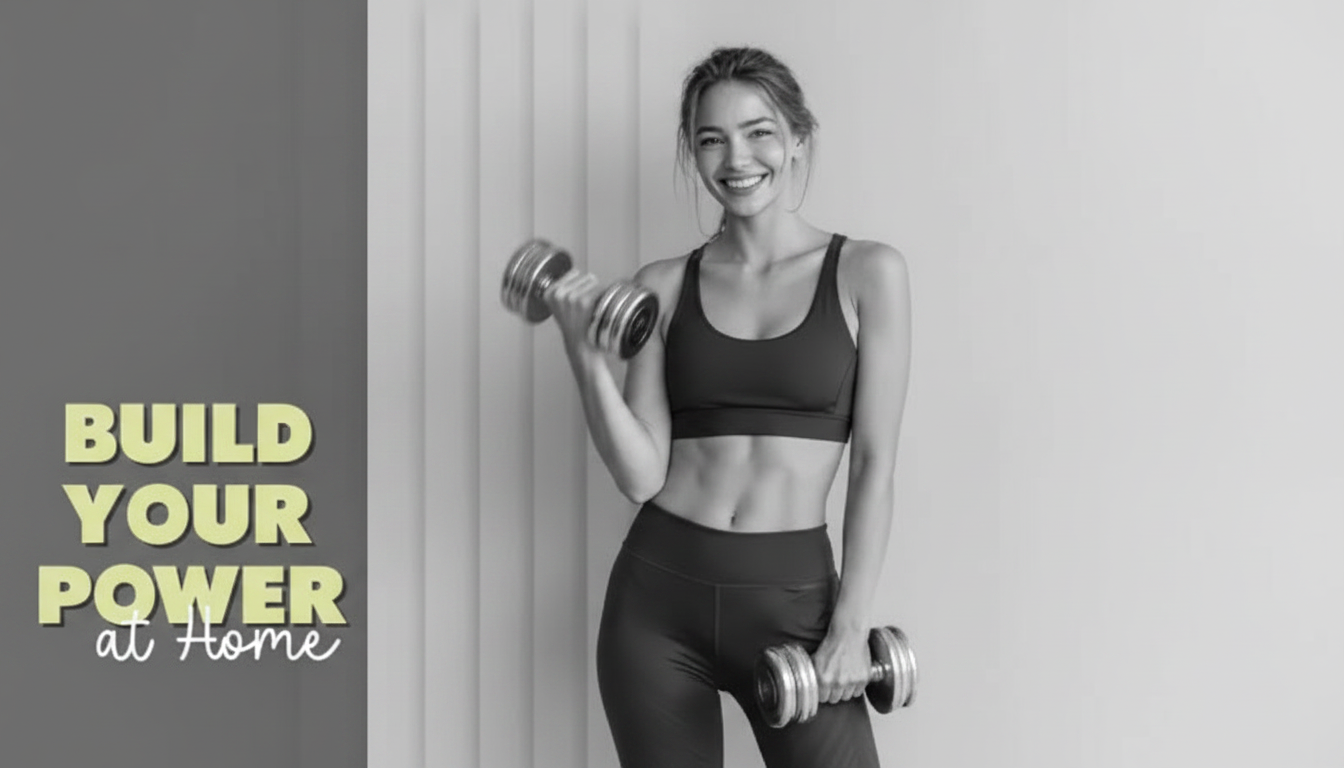
Building strength at home can be straightforward with a small set of reliable movements, a simple weekly schedule, and a way to track progress. The goal isn’t to “destroy” yourself—it’s to practice the same foundational patterns often enough that your body gets measurably stronger: steadier balance, better control, and more force with cleaner form. Below is a beginner-friendly plan built around bodyweight exercises you can scale up or down, plus a checklist approach that keeps sessions short, consistent, and effective.
For beginners, strength is mostly about mastering the basics. Instead of chasing soreness, focus on movement patterns you’ll use in daily life: squat, hinge, push, pull, and bracing (plus carries when you have load available).
For general adult health guidelines that support strength training, see the Physical Activity Guidelines for Americans (2nd edition) and the CDC’s adult activity recommendations.
You don’t need a full gym. A clear patch of floor, a stable chair or bench, and a wall can cover most beginner strength work. A mat adds comfort, a towel can work as a slider, and a backpack becomes your “adjustable weight” later.
| Item | Use | Beginner alternative |
|---|---|---|
| Chair/bench | Incline push-ups, step-ups, split squats | Stairs or sturdy couch edge |
| Wall | Wall sit, wall push-up, balance support | Countertop support |
| Backpack | Progressive loading for squats/hinges | Water bottles in a tote bag |
| Towel | Hamstring sliders, core moves | Socks on a smooth floor |
Small environmental cues make follow-through easier: keep workout clothes ready, use a timer, and keep a printed checklist within reach. If you like a visible “start now” signal in your space, the Irregular Beveled Mirror Wall Clock with Roman Numerals – Silent Quartz Movement can double as a simple, always-on reminder to take your 20–30 minutes.
A warm-up should make you feel warmer and more stable—not tired. Keep it brief and repeatable.
Choose variations that let you move with control. If you can’t keep form, make it easier. If it feels too easy, slow it down or progress the variation.
| Day | Workout focus | Exercises (2–3 sets each) |
|---|---|---|
| Day 1 | Full body A | Sit-to-stand squat; incline push-up; glute bridge; dead bug; calf raises |
| Day 2 | Full body B | Split squat (supported); row variation; hip hinge drill/bridge; plank (short holds); wall sit |
| Day 3 | Full body A (repeat) | Repeat Day 1 and add 1–2 reps or slower tempo where possible |
For a science-based overview of how to progress resistance training over time, the ACSM Position Stand on progression models is a helpful reference.
If you want a ready-to-use plan with a checklist format that keeps decisions minimal, use Strength Made Simple: Easy Exercises to Build Your Power at Home (digital download). It’s built for bodyweight training, includes scalable options, and pairs well with a timer and a simple weekly schedule.
For recovery walks on off days (a simple way to boost consistency without adding workout complexity), comfortable shoes help—see the 2025 Women’s Suede Lace-Up Loafers – Casual Retro Flats for Spring & Autumn.
Two to three full-body sessions per week with a rest day between is a strong starting point. On off days, walking and light mobility work are fine—consistency matters more than pushing intensity early.
Yes—progressive overload can come from more reps, slower tempo, longer range of motion, unilateral variations, reduced rest, and harder exercise versions. Adding a backpack later can extend progress when bodyweight versions start to feel easy.
Scale the movement (use incline push-ups, supported squats), shorten the range of motion, slow down, and check alignment. Stop if you feel sharp or joint pain, and seek professional guidance if pain persists.





Leave a comment