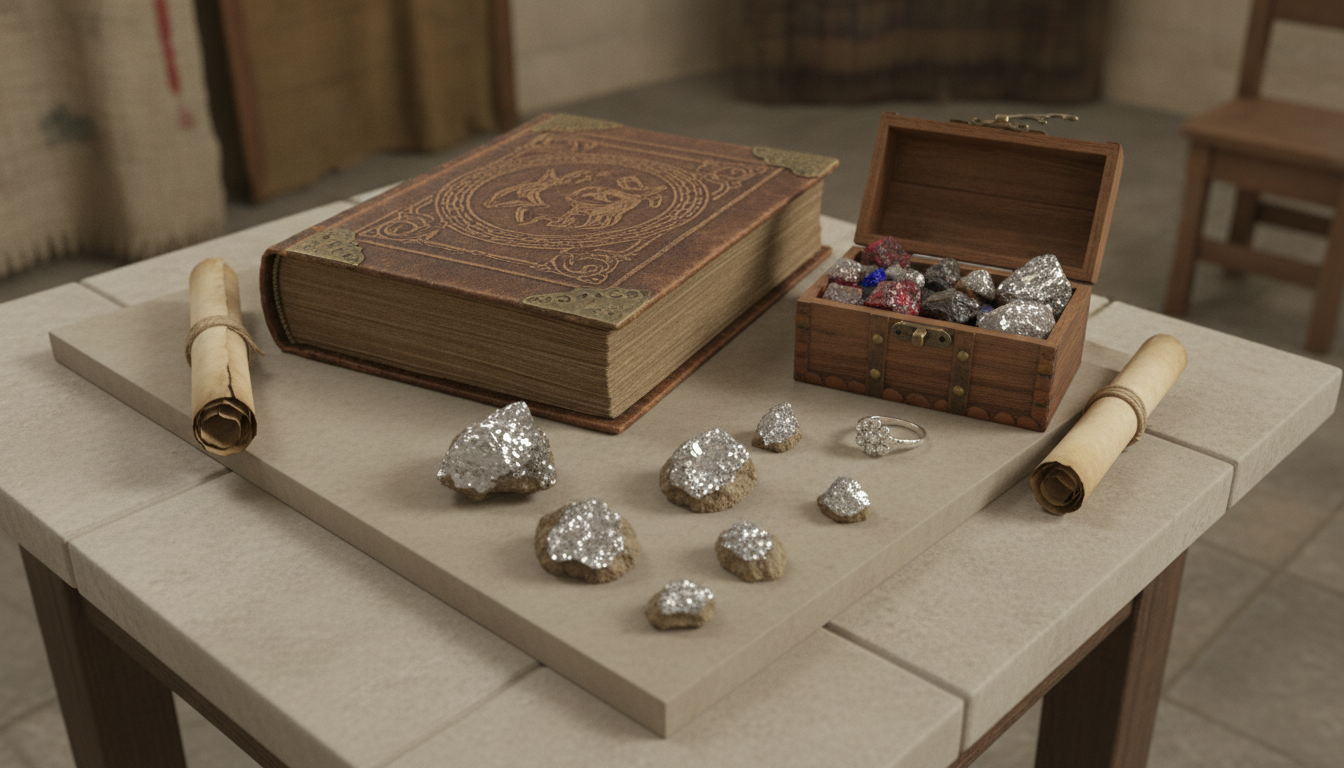
Yes. Diamonds were known in medieval Europe, though they were far rarer and less widely worn than they are today. Most stones reaching the West came through long trade routes from India, where diamond mining and cutting traditions were already established. Because supply was limited and transport was risky, diamonds tended to appear in royal treasuries, church holdings, and the collections of high nobility rather than in everyday jewelry.
Medieval references to diamonds show up in inventories, gift records, and lapidaries (stone books) that described gems’ supposed properties. While many claims were symbolic or medicinal rather than scientific, the repeated mention of diamonds indicates they were recognized and valued, often as emblems of power, constancy, and protection.
In the Middle Ages, diamonds were often mounted in rings, brooches, reliquaries, and ceremonial objects. Settings commonly emphasized the stone’s natural form because cutting technology was limited compared to modern faceting. Early styles favored point cuts and simple polishing that preserved the octahedral crystal shape, producing a subtler sparkle than today’s brilliant cuts.
Diamonds also served diplomatic and devotional purposes—given as high-status gifts, set into regalia, or used to adorn religious artifacts. Their rarity made them less about everyday fashion and more about signaling wealth, authority, and sacred importance.
Beyond beauty, diamonds were credited with protective qualities in medieval tradition: guarding against harm, strengthening courage, or countering poison. These beliefs varied by region and period, but they helped cement the diamond’s reputation as a stone of exceptional “hardness” and prestige—traits that naturally fit medieval ideals of steadfastness and invincibility.
For a modern design take that nods to medieval-inspired geometry, see the Medieval Diamond Frame Black Floor Lamp (E27 LED) guide.
For Diamonds in the Middle Ages: Use, Origins, Beliefs, the best answer depends on fit, material, care instructions, and how the product will be used day to day.
Most diamonds known in medieval Europe were traded from India through complex overland and maritime routes. Their long journey contributed to their high cost and exclusivity.




Leave a comment
You must be logged in to post a comment.