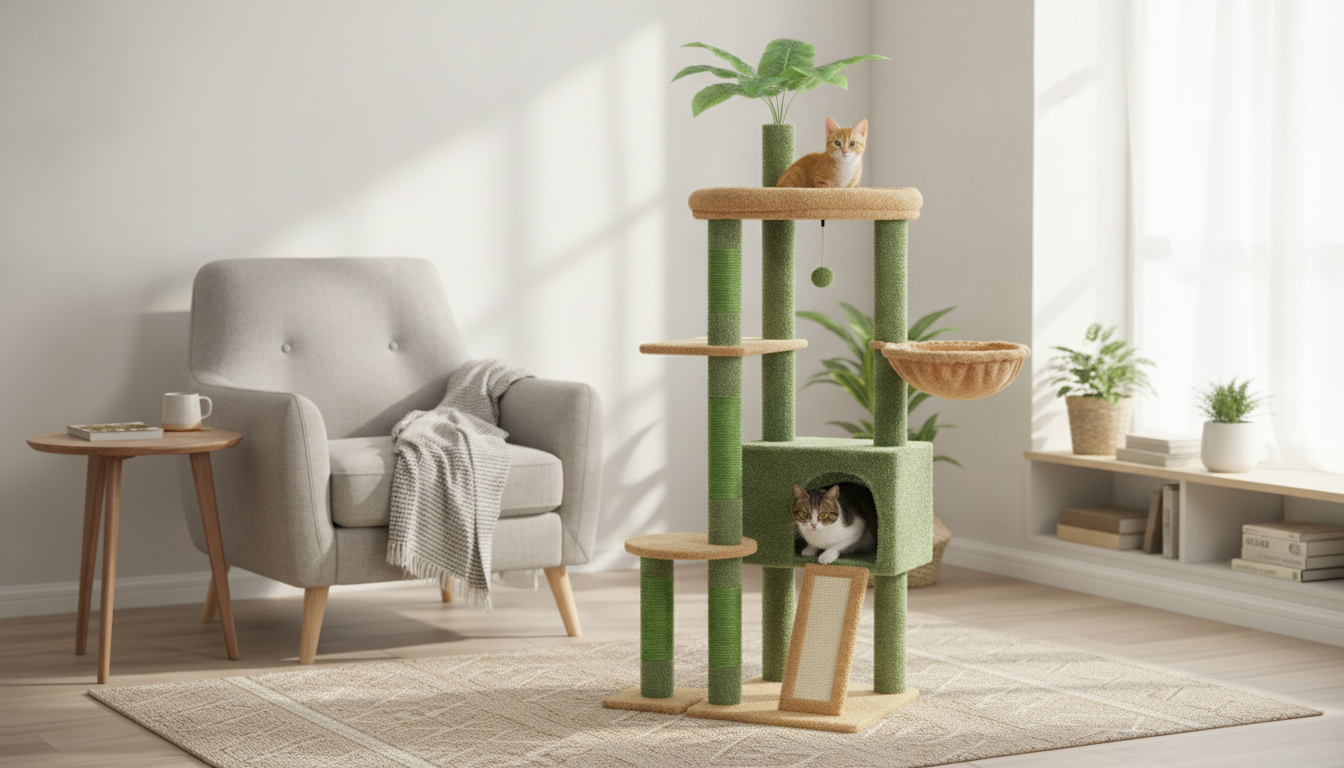
A cactus-shaped cat tree adds vertical territory, scratch-friendly surfaces, and cozy perches while doubling as quirky décor. The cactus silhouette feels more like an intentional accent than a bulky tower, and the multi-level design gives cats a daily outlet for climbing, surveying, and settling into predictable rest spots. That combination can help curb boredom behaviors indoors and redirect scratching away from furniture—especially when the tree is placed where your cat already likes to hang out.
Below are practical buying checks, placement ideas, and simple “first-week” tactics that help most cats use a new cactus tower quickly and confidently.
A cactus cat tree is only as good as its stability and usability. Before choosing a model, scan these details to avoid the most common disappointments (wobble, cramped platforms, and scratch posts that wear out too fast).
| Household | Recommended focus | Why it helps | Placement tip |
|---|---|---|---|
| Single active cat | Taller climbing layout | Burns energy and reduces boredom | Near a window for bird-watching |
| Two or more cats | Multiple perches at different heights | Creates separate “zones” to reduce tension | Give access from more than one side |
| Apartment/small room | Compact footprint with vertical height | Adds territory without using floor space | Corner placement + wall clearance |
| Senior cat | Lower steps and wider platforms | Easier joints, safer landings | Add a step stool if needed |
| Heavy scratcher | Thicker posts and more scratch area | Better durability and habit formation | Place near the current scratching hotspot |
Placement is the difference between a tower that becomes “the spot” and one that gets ignored. Cats are social observers; they often prefer a perch near the action rather than tucked away like storage furniture.
Vertical space is a core part of feline enrichment. If you want a deeper framework for building an engaging home setup, see the American Association of Feline Practitioners’ environmental enrichment guidelines and International Cat Care’s advice on cat behavior and home environment support.
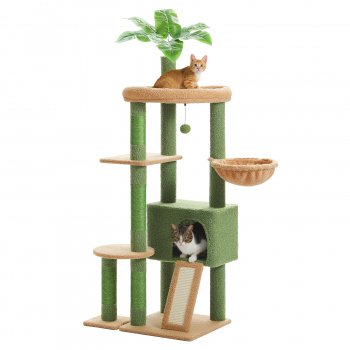
If you want a piece that functions like a true climb-scratch-lounge station without screaming “pet furniture,” the Multi-Level Cactus Cat Tree delivers a playful cactus look with multiple tiers for daily enrichment. It works best as a dedicated scratch-and-perch zone when paired with smart placement (near a window or social area) and a simple treat-based introduction.
To help with footing and stability—especially on hardwood or tile—consider anchoring the area with a soft, grippy rug. Two in-stock options that pair well under a cat tree are the Botanical Floral Non-Slip Area Rug – Soft, Modern & Machine Washable and the Soft Velvet Plush Blue Rug for Living Room & Bedroom – Modern Fluffy Carpet.
Yes, as long as the tower is stable, the platforms are appropriately spaced, and it’s placed on a flat, non-slip surface. For seniors, lower steps and wider platforms are easier on joints; adding a small step stool can help. For kittens, supervise early exploration until you’re confident they can climb and descend comfortably.
Choose a height that fits your room and your cat’s mobility, prioritizing multiple usable levels over maximum height. A slightly shorter tower with comfortable steps and sturdy perches often gets more daily use than a very tall model with awkward spacing.
Put the scratching surface close to the couch (especially the corner your cat targets), then reward any scratching on the post right away. Use treats or a light sprinkle of catnip if your cat responds to it, and temporarily cover or block the favorite couch-scratch area while the new habit becomes routine.


Leave a comment
You must be logged in to post a comment.